
Outdoor Hot Tub & Swim Spa Installation Chicago Suburbs
Wave Outdoors designs and installs complete hot tub and swim spa environments for homeowners in Mt. Prospect, Arlington Heights, Palatine, and Chicago's northwest suburbs. We handle the foundation, permit coordination, electrical hookup, hardscape surround, privacy screening, and landscape integration — one team, one project, zero contractor juggling.
Questions? Call (312) 772-2300
Hot Tub vs. Swim Spa — Which Is Right for Your Chicago Backyard?
The most common question we get before design begins. Here's how to think through it.
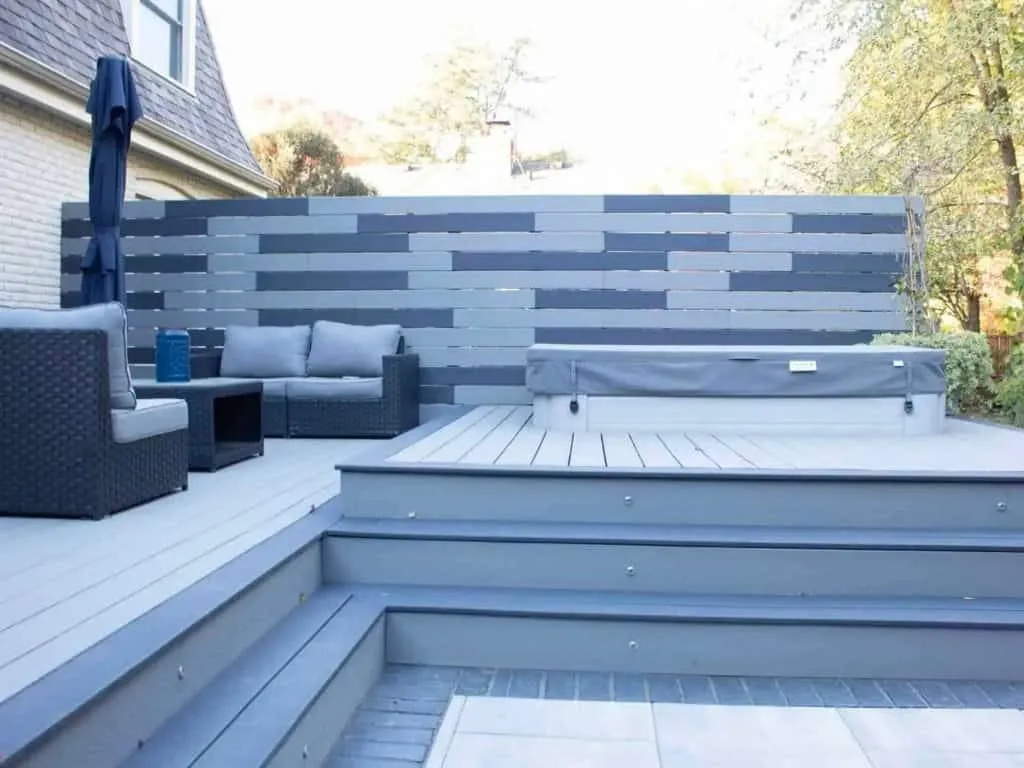
Hot Tub (Portable Spa)
6–8 person acrylic shell, 240V/50-amp electrical, full-foam insulation. A year-round retreat in Chicago winters. 3,000–5,000 lbs fully loaded — the foundation matters as much as the tub. Installation including landscape integration typically runs $20,000–$100,000 depending on scope.
Swim Spa
12–20 ft, 10,000–15,000 lbs loaded. Combines hydrotherapy with a swim current. Requires an engineered concrete slab, often needs a crane. Demand has surged in 2026 — plan early if this is on your radar.
In-Ground Spa
Permanently built into the hardscape. Looks architectural, matches high-end outdoor living spaces. Requires excavation, bond beam construction, and plumbing to equipment pad. Best for homeowners building a full outdoor living environment.
We assess your yard, your goals, and your budget during the design consultation and recommend the configuration that makes the most sense — not the most expensive one.
Electrical Requirements for Hot Tub Installation in Illinois
This is where most homeowners underestimate complexity. Hot tub electrical must be done by a licensed electrician in Illinois — Cook County requires a letter of intent from a registered electrical contractor before permits are issued.
Standard requirements for a 240V hot tub:
GFCI disconnect placement (NEC 680 + Cook County code):
Bonding and grounding: All metal parts associated with the spa must be bonded. All electrical equipment within 5 feet of the inside wall must be grounded. All equipment must be UL-listed or approved by a Nationally Recognized Testing Lab.
Subpanel: Many homes in Chicago's northwest suburbs have panels that cannot support a new 50-amp dedicated circuit without upgrading. We identify this during consultation and coordinate the licensed electrician when a new subpanel is needed.
We coordinate licensed electricians as part of every hot tub installation. The electrical work is included in our project management process — you don't need to find your own electrician.
Cook County Hot Tub Permits — What's Required and Who Handles It
Every hot tub or spa with a depth of 24 inches or more requires a permit in Cook County. This is a two-stage process that most homeowners don't know about.
Step 1 — Cook County Public Health
Before the building permit, approval is required from Cook County Dept. of Public Health (2121 Euclid Avenue, Rolling Meadows, IL 60008). Required documents include manufacturer specifications (filtering method, disinfection method, shell materials) and a plot plan showing the house, structures, utility lines, and proposed spa location with exact dimensions to lot lines.
Step 2 — Cook County Building & Zoning
After public health approval, application goes to Building and Zoning for building, electrical, and plumbing department review. Digital submission to [email protected]. Permit fee: 1/10th of 1% of estimated project cost (minimum $25).
Setback Requirements
Spa and all equipment more than 10 ft from any property line • Underground utility lines at least 5 ft from inside edge of spa • Overhead utility lines at least 10 ft horizontally from inside edge of spa • Spa must be installed on an impervious surface (concrete or pavers — not lawn or gravel)
Step 4 — Municipal Permit (Incorporated Villages)
If your property is within an incorporated village such as Mt. Prospect, the village runs its own permit process independently of Cook County. Mt. Prospect Building Division (50 S. Emerson St.) follows IBC with local amendments. We handle the village application alongside the county process.
HOA Approval (if applicable)
If your property is governed by an HOA, written board approval is typically required before a permit application can be submitted. Common restrictions cover fence heights (6 ft max) and pergola setbacks. If this step applies to you, we flag it early and prepare the documentation and 3D renders your HOA board needs. If you're not in an HOA, skip this step entirely.
We pull the permit and manage all inspections. You don't need to navigate this yourself.
Foundation Options — Engineering for Chicago Freeze-Thaw Cycles
Chicago's frost depth is 42 inches — footings for any concrete work must be poured below this line. A filled 6-person hot tub with occupants can exceed 5,000 pounds. A swim spa can reach 15,000 pounds.
Reinforced Concrete Pad
4–6 inches thick, #3 or #4 rebar on 12-inch grid, footings below the 42-inch frost line. Most stable and durable option. Drainage slope built in (1/8 inch per foot). Best for: all tub weights, permanent installs, high-end projects.
Structural Paver Base
6–8 inches of compacted aggregate topped with interlocking pavers. Drains between joints, integrates beautifully with patio materials. Requires precise leveling and proper geotextile fabric below aggregate. Best for: cohesive hardscape environments.
Reinforced Deck Integration
Hot tubs can be recessed into a deck — but standard residential decks are not engineered for this load. Deck framing must be redesigned with post footings below the 42-inch frost line. Cook County requires stamped engineering drawings for structural deck modifications.
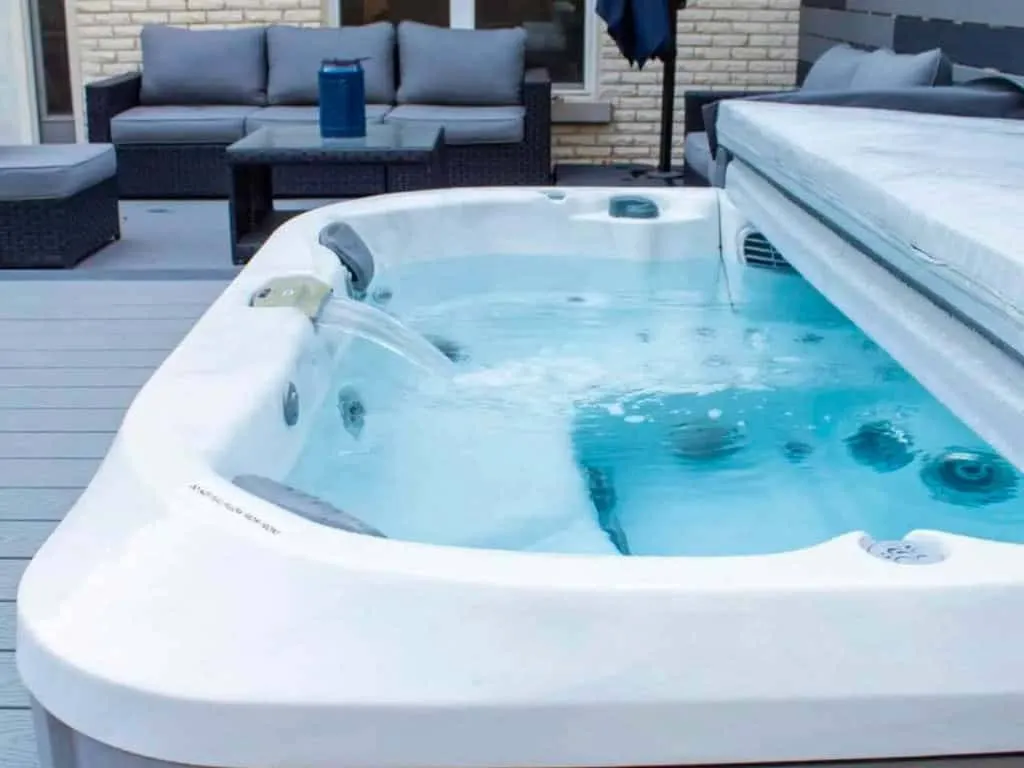
Our Hot Tub Installation Process
From site visit to completed backyard retreat — here is how every installation runs.
On-Site Design Consultation
We assess access routes for delivery, site drainage, proximity to the electrical panel, and setback distances. We discuss your goals, preferred tub type, and privacy requirements. At your property.
2D & 3D Design & Proposal
Photorealistic 2D or 3D rendering of your complete hot tub environment on your actual property — foundation, surround, privacy, lighting, and plantings. Review, revise, approve. Itemized proposal before any contract is signed.
Permits & Foundation
We submit the permit application, coordinate manufacturer drawings and the electrical letter of intent, and manage the process through approval. Site preparation, grading, and foundation installation follow.
Delivery, Integration & Walkthrough
Tub delivery and placement, electrical hookup by licensed electrician. Surround, privacy screening, plantings, lighting, and pathways completed. Final walkthrough: operation, cover use, maintenance schedule.
Hot Tub Landscape Integration — Wave's Differentiator
The hot tub unit is a commodity. The environment around it is not. Most hot tub contractors set a tub on a pad, connect the electrical, and leave. We design the complete environment.
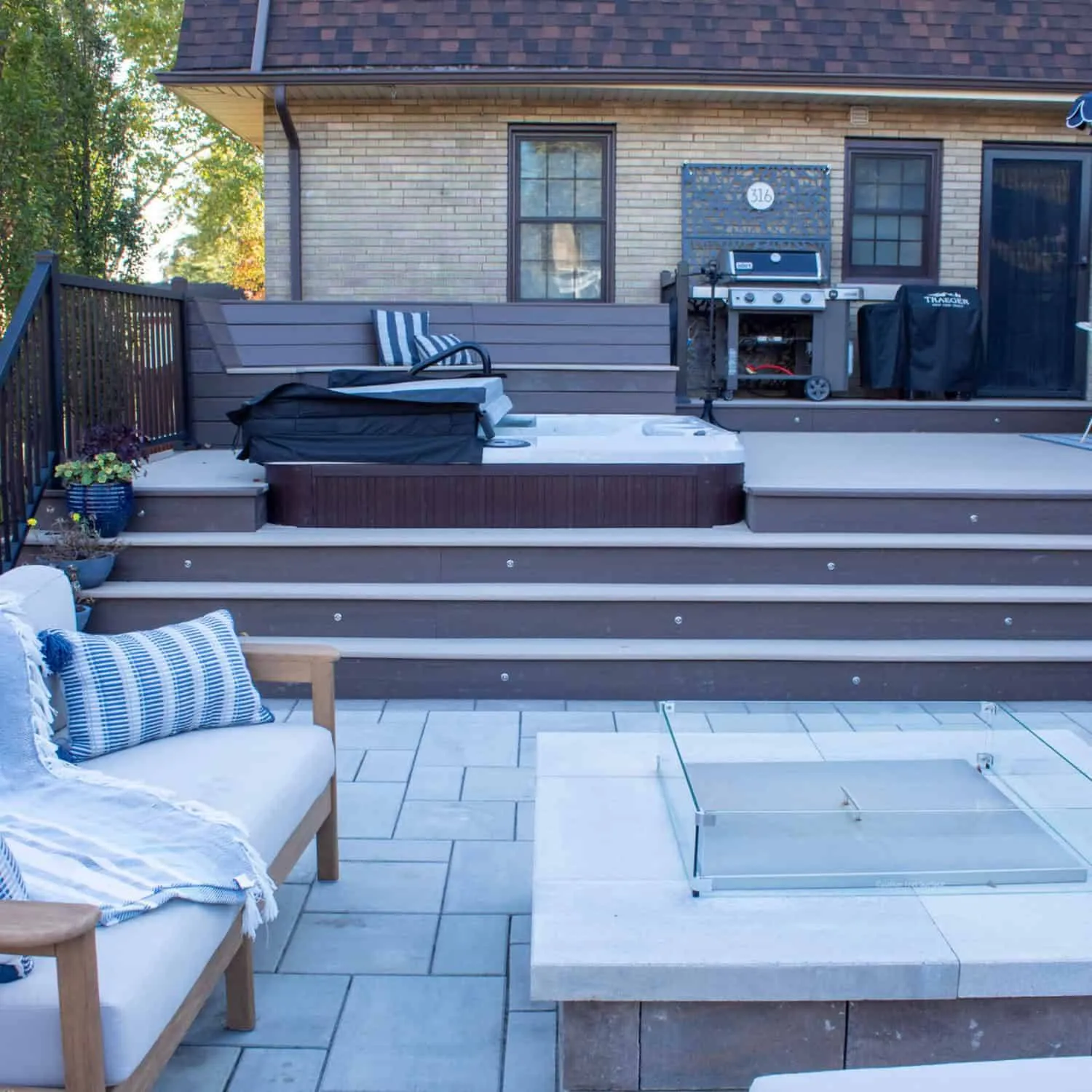
Surround & Patio
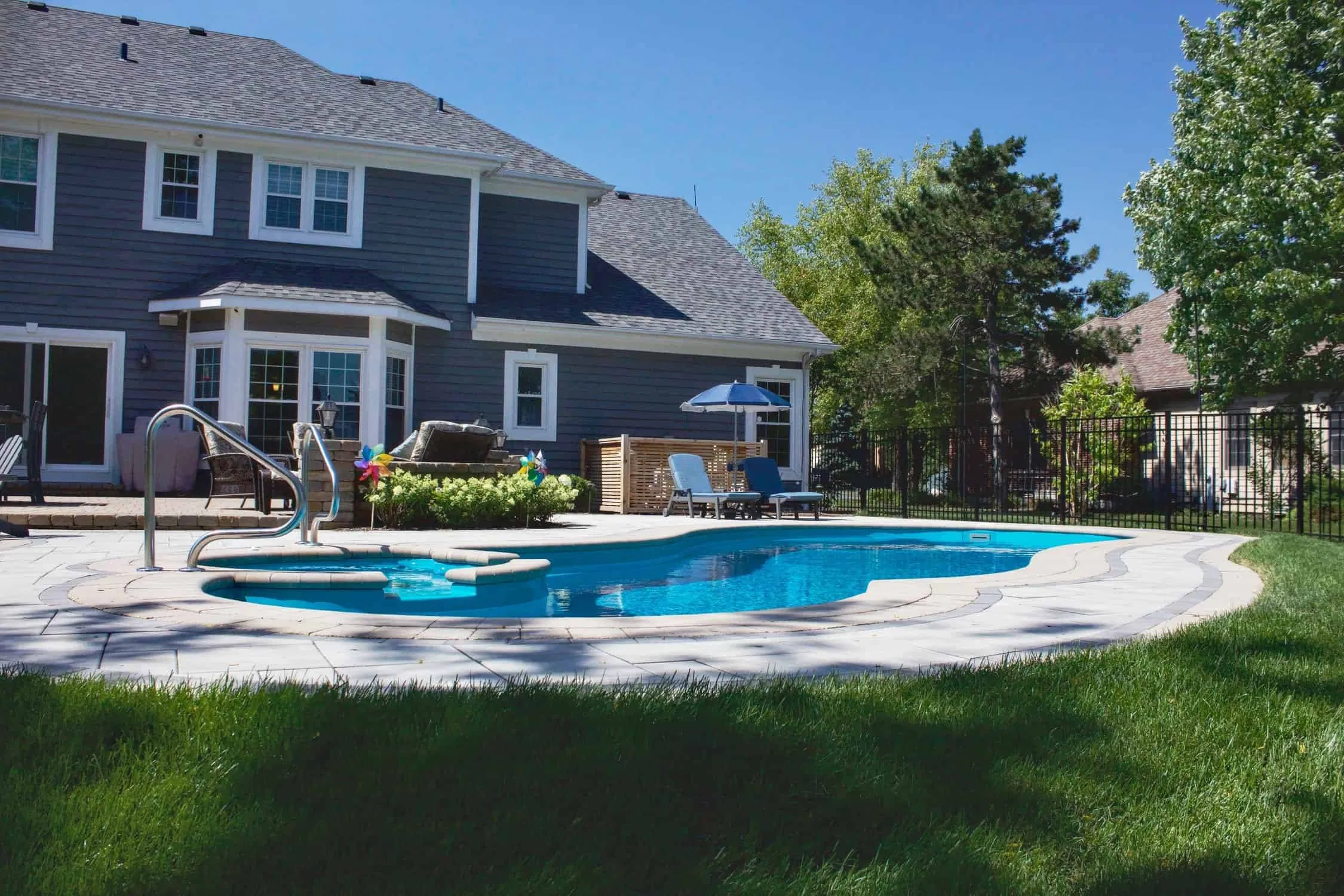
Custom paver or natural stone surround makes the tub look built-in. Steps, benches, planters, and edge detailing give the installation a finished feel a bare pad cannot match.
Privacy
Leaves are off the trees for 5 months in Chicago. Layered solutions: cedar or composite fence, evergreen plantings (arborvitae, skip laurel), pergola for overhead privacy, and decorative trellis panels.
Lighting
Most hot tub use happens after dark. Path lights, step lights, and uplights on surrounding plants create depth and keep access safe. All low-voltage LED for energy efficiency.
Pergolas & Gazebos
Overhead structure transforms a hot tub from an amenity into a room. Designed for local snow loads (40–65 lbs/sq ft). Options for screens, curtains, integrated lighting, and ceiling fans.
Using Your Hot Tub Year-Round in Chicago Winters
Stepping into 102°F water on a 15°F night is a specific pleasure that never gets old. Here is how we plan installations for year-round Chicago use.
Insulation spec for Chicago climate: Full-foam cabinet insulation — R-12 minimum for Chicago winters (Hot Spring, Bullfrog, and Caldera models are known for insulation quality). Insulated cover: R-14 minimum; an R-21 arctic-grade cover pays back in energy savings within 2–3 winters and handles Chicago snow loads. Freeze protection mode circulates water automatically when external temperature drops toward freezing — never disable this.
Operating costs in Chicago winters: Electricity runs approximately $40–$80/month in winter (vs. $20–$40 in summer). Larger heaters (4kW–6kW) are recommended for Chicago climate. Energy-efficient models with good insulation and covers pay for themselves in lower heating costs over 10+ years.
Wind protection: In the flat, open lots common across the northwest suburbs, wind is what makes winter hot tub use uncomfortable — not temperature. We design windbreak walls, dense evergreen screening (arborvitae at 6–8 feet creates effective windbreak), and pergola side panels to reduce exposure. Prevailing winds in the NW suburbs come from the west and northwest — we position screening on that side.
Heated pathways: For premium installations, we install electric or hydronic heated pavers on the path from the back door to the tub. A small percentage of total project cost — and one of the most common reasons people stop using their hot tub in winter is a cold, icy walk. We eliminate that.
Why Chicago Homeowners Choose Wave Outdoors
Design-Build Integration
We are not a hot tub delivery company. We are a licensed landscape design and construction firm that integrates hot tub environments into complete outdoor living spaces. The foundation, the surround, the privacy, the lighting — designed together and built by one team.
3D Visualization Before You Commit
See your complete hot tub environment on your actual property before any work begins. Revisions are easy in design. They're expensive in concrete.
Local Permit Knowledge
We know Cook County's two-stage permit process. We know the Mt. Prospect Building Division. We know the common HOA restrictions in the northwest suburbs. We handle all of it.
Licensed and Insured in Illinois
All electrical work coordinated through licensed electricians. All structural work follows applicable building codes. All permit applications filed by our team.
Award-Winning Chicago Hardscaping
As a multi-year Best of Houzz and Angi Super Service award winner, our reputation is built on environments that actually last. We engineer every foundation specifically for Chicago's 42-inch frost depth, intense freeze-thaw cycles, and heavy snow loads.
Your hot tub environment will look incredible in July, and perform flawlessly in February.
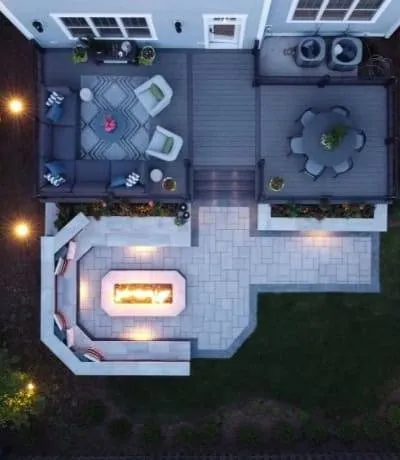
Hot Tub Installation Cost Guide — Chicago Area
These ranges cover landscape and installation work. They do not include the hot tub unit itself. Hot tub units: $5,000–$18,000 for quality residential models (Hot Spring, Bullfrog, Jacuzzi, Caldera).
Essential Site Prep & Integration — Starting at $10,000
Foundation preparation, permit coordination, and licensed electrical hookup for clients who need their site legally ready for a hot tub unit. Includes Cook County two-stage permit application, GFCI disconnect installation, and impervious surface base. The unit is supplied separately.
The Integrated Environment — $40,000 – $100,000
Custom paver or natural stone surround, deck modifications, privacy walls (cedar fence + evergreen plantings), low-voltage landscape lighting, and pathway from the home. Designed to make the installation look architectural rather than placed. Our most requested scope for northwest suburban homeowners.
The Architectural Spa & Hardscape Build — $100,000 – $250,000+
In-ground spas and swim spas requiring engineered foundations, crane logistics, custom timber pergola or pavilion structures, layered privacy systems, heated paver pathways, and full backyard transformation. Built for homeowners redesigning the entire outdoor environment around the water feature.
What drives cost most: Distance from electrical panel, access constraints (crane required, tight gate), foundation type, privacy scope, lighting and pathway length, overhead structure ($8,000–$30,000 depending on scope), permit complexity, and swim spa vs. hot tub. Detailed, itemized proposals after the design consultation. No surprises.
Frequently Asked Questions
Common questions from Chicago northwest suburban homeowners about hot tub installation.
Yes. Any hot tub or spa with a depth of 24 inches or more requires a permit in Cook County. The process involves two stages: approval from Cook County Public Health first, then Cook County Building and Zoning. If your property is within an incorporated village like Mt. Prospect, the village handles its own permits separately. Wave manages the permit application and all inspections as part of our service.
Most hot tubs require a dedicated 240-volt, 50-amp circuit with GFCI protection. The GFCI disconnect must be installed between 5 and 15 feet from the spa and within line of sight. All metal parts must be bonded. Cook County requires a letter of intent from a registered electrical contractor before permits are issued. This work must be done by a licensed electrician in Illinois — not a homeowner. A new subpanel may be required if your existing panel cannot support the additional load.
Yes — and most of our clients say winter is their favorite time to use it. Modern hot tubs maintain 100–104°F regardless of outdoor temperature. For Chicago climate, we specify full-foam insulated cabinets, R-14 to R-21 covers, and properly sized heaters. Energy costs run approximately $40–$80/month in winter. The key design elements for winter use are wind protection on the west/northwest exposure, a clear non-slip path from the house, and an overhead structure if budget allows.
Cook County requires the spa and all equipment to be more than 10 feet from any property line. Underground utility lines must be at least 5 feet from the inside edge of the spa; overhead utility lines must be at least 10 feet horizontally. Mt. Prospect and other incorporated villages may have additional setback requirements. We verify all setbacks during the site consultation.
A filled 6-person hot tub weighs 3,000–5,000 pounds. The foundation must be engineered for this load and for Chicago's 42-inch frost depth — footings must go below the frost line or the slab will heave and crack. Options include a reinforced concrete pad (most durable), a structural paver base (best for hardscape integration), or a reinforced deck (requires engineered drawings). Standard existing patios and decks are typically not adequate. We assess your site and specify the right foundation.
A hot tub (spa) is typically 6–9 feet square, holds 4–8 people, and focuses on hydrotherapy jets and soaking. A swim spa is 12–20 feet long and adds a current-generating system that lets you swim against resistance — effectively a compact lap pool and hot tub combined. Swim spas weigh 10,000–15,000 lbs fully loaded and require engineered foundations. Both are installed year-round in Chicago. Swim spa interest has surged in 2025–2026 as homeowners look for exercise + relaxation in a single compact footprint.
After permit approval (typically 3–6 weeks in Cook County municipalities), active construction for a hot tub installation runs 1–4 weeks depending on foundation scope and landscape integration. Swim spa installations with complex foundations may run longer. We provide a project timeline with the proposal.
Many northwest suburban Chicago HOA documents require written approval before applying for a building permit. Common HOA restrictions include fence heights (typically 6 feet maximum), pergola setbacks from property lines, and requirements for exterior material types. We flag HOA requirements early in the design process. If you need to go through your HOA board, we prepare the documentation and 3D renders to support your application.
Ready to Design Your Hot Tub Environment?
Schedule an on-site design consultation. We visit your property, assess the site, and show you what your space can look like in 3D — before any commitment.
Or call (312) 772-2300 to start the conversation.