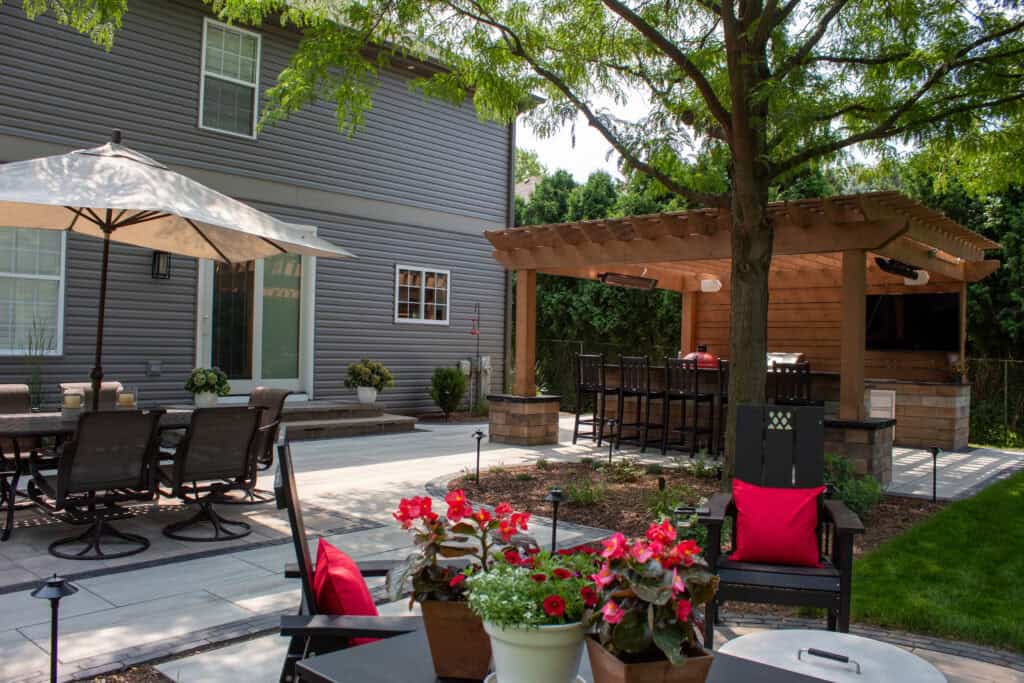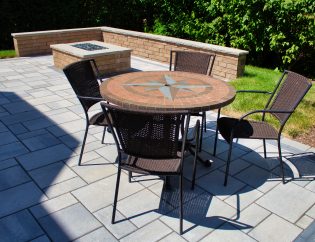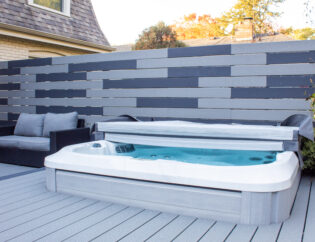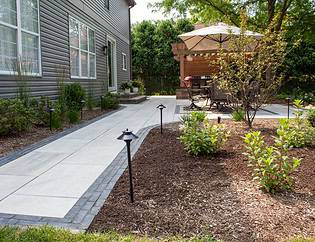
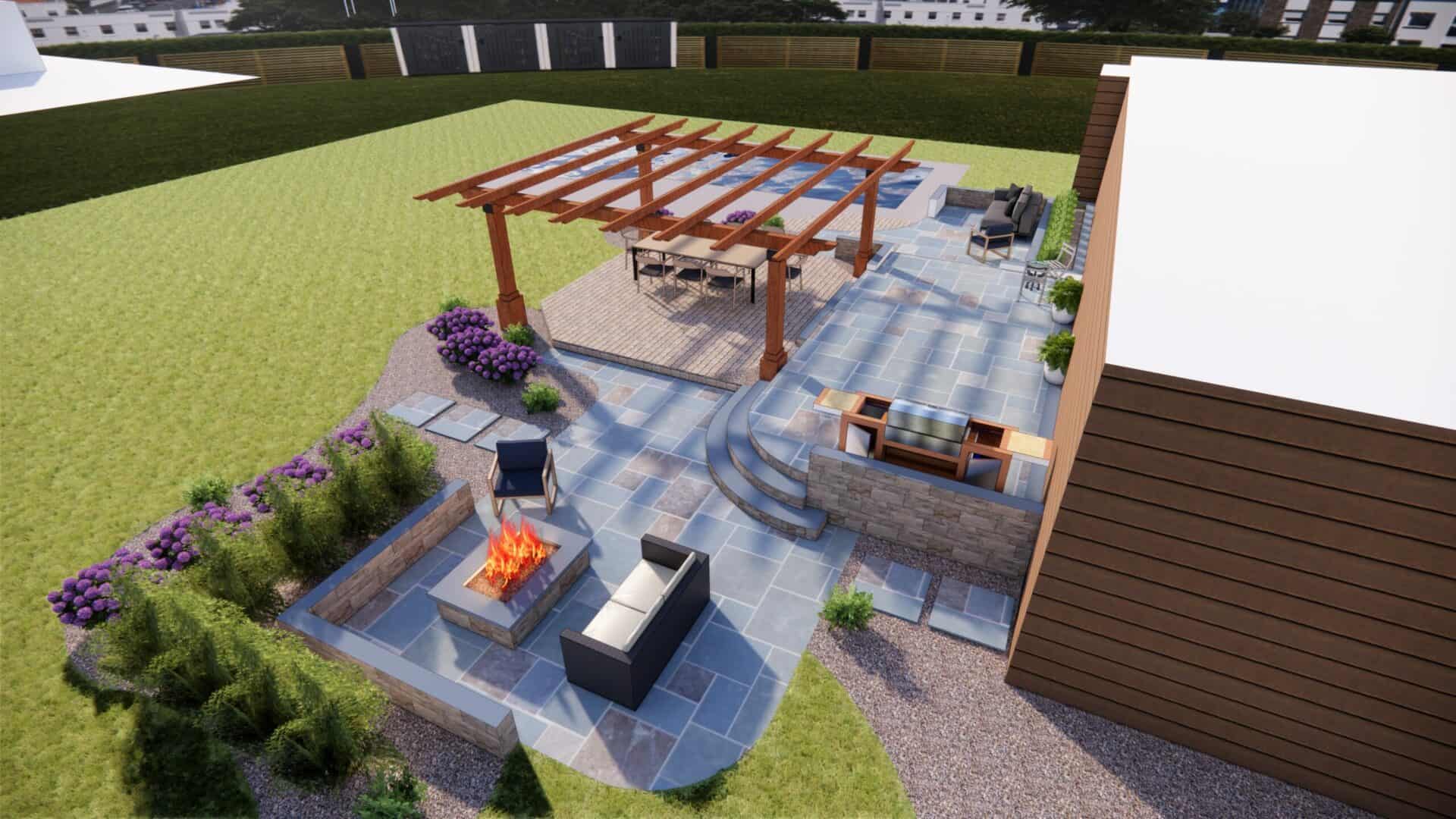
For landscape design cost, Wave Outdoors publishes a budget of $750 to $5,000 for 3D Design & Consultation. Building the design is budgeted separately: a hardscape and patio project, for example, runs $10,000 to $100,000. These are budget estimates, not quotes. Your design, materials, site and priorities decide where you land.
How much does landscape design cost in Chicago's northwest suburbs?
Wave Outdoors, which designs and builds landscapes for homeowners in Chicago's northwest suburbs from its base in Mount Prospect, publishes these budget ranges:
| Scope | Published budget range |
|---|---|
| 3D Design & Consultation | $750 to $5,000 |
| Garden Design & Installation | $5,000 to $100,000 |
| Hardscape Design & Patio Installation | $10,000 to $100,000 |
| Fire Features (Pits & Fireplaces) | $5,000 to $20,000 |
| Ecological & Sustainable Landscapes | $5,000 to $100,000 |
To set a realistic first budget, add up the rows your plan touches. New planting, a patio and a fire pit, for example, span three project rows, plus the design line if you want one.
Keep the design line apart when you compare proposals. A design-only budget can't be weighed against a proposal that includes installation. Garden Design & Installation and Hardscape Design & Patio Installation both include installation, so check what work each line covers before you compare totals.
A simple side-by-side sheet keeps proposals honest:
| For each proposal | Write down |
|---|---|
| Design line | The deliverables and the decisions they settle |
| Project lines | The named work in each line |
| Open items | Materials not yet chosen, assumptions and exclusions |
A lower total that leaves more decisions open isn't the cheaper project yet.
What changes the final cost?
The National Association of REALTORS' outdoor-features report says project design, material quality, location, the home's age and condition, and homeowner preferences can influence actual cost.
Turn each one into a question for every estimate you get:
- Design: Which decisions are settled, and which are still open?
- Materials: Does the proposal name the quality or grade?
- Location: What site conditions does the price assume?
- Home age and condition: Which existing conditions does the estimate account for?
- Your preferences: Which of your priorities are in the scope, and which still need a decision?
When two totals differ, these answers usually show why.
Read cost benchmarks with their assumptions
National cost figures come with assumptions. The NAR report bases its figures on a 2,500-square-foot house on a 14,000-square-foot lot, built after 1978, with no hidden issues and with projects and materials of standard or typical quality.
If your home is older, your lot is larger or you want better materials, the benchmark is context, not an estimate for your project.
What a per-square-foot price leaves out
A square-foot price measures size but leaves out the design behind it, the material quality, the site conditions and what you want the space to do, the same factors NAR names above.
Two proposals can price the same 400 square feet and describe very different work. Before you compare per-square-foot figures, ask:
- What work does the measured area include?
- What material quality does the figure assume?
- Which property conditions are included or excluded?
Once the scope matches, a per-square-foot figure is a fair comparison point. Before that, it can mislead.
What should a written contract include in Illinois?
The Illinois Attorney General says that for home repair contracts over $1,000, homeowners have the right to a written contract or work order that describes the work and states the total cost. The contract should include parts and materials and specify details such as quality and grade.
That gives you a simple test for any landscape proposal: a clear work description, a total cost, the parts and materials, and the quality or grade of those materials. If a line just says "patio" or "plantings," ask for the material and grade before you compare totals. If the patio line is pavers or concrete, see how pavers vs concrete patio compare.
2D plan or 3D design: which level of design do you need?
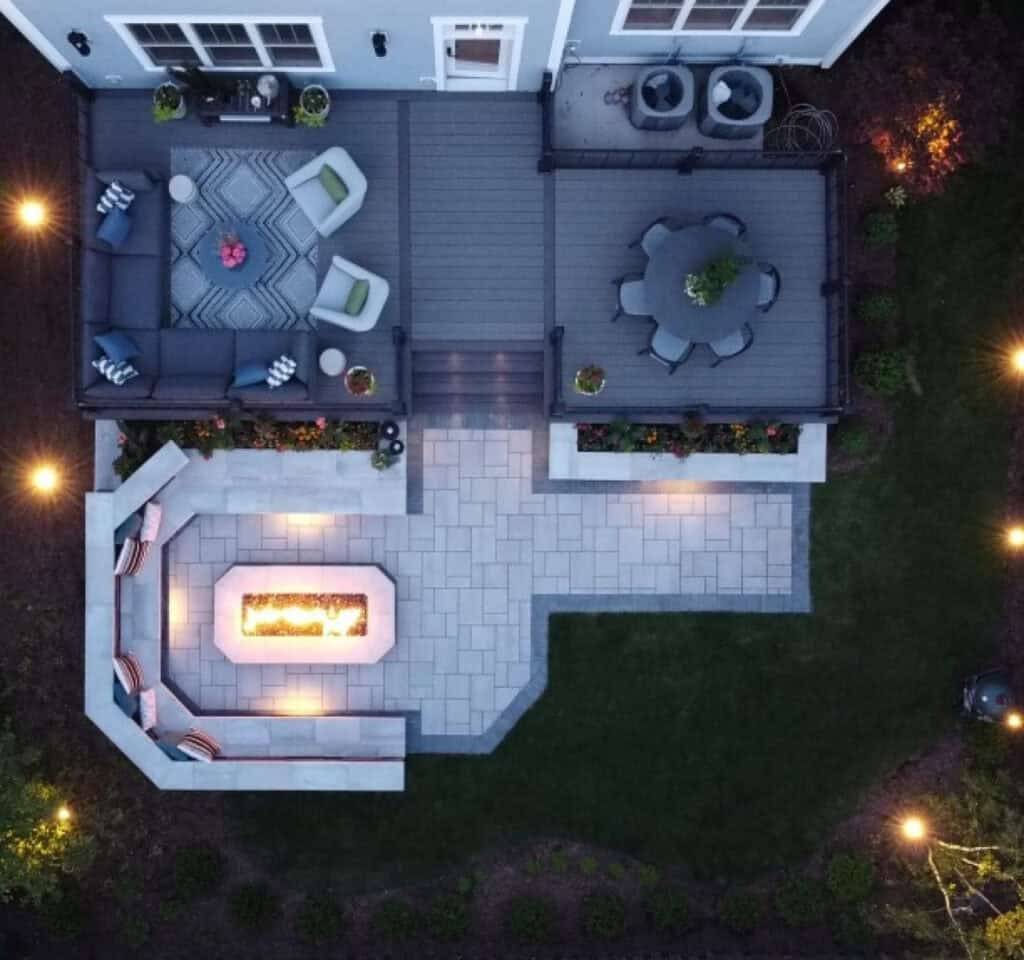
Choose the level of design by the decisions you still need to make. Wave Outdoors offers 2D landscape design, and custom 3D design is available as a paid add-on. The published 3D Design & Consultation budget in the table covers the 3D option; ask separately how a 2D plan is priced for your property.
Work through it in order:
- List your open decisions: placement, materials and which priorities matter most.
- Ask each designer what deliverables you get and how revisions work.
- Check that the deliverables settle the decisions on your list.
- Keep the design line separate from the construction lines.
- If the total runs over your build budget, ask which parts could be revised or phased. Don't assume phasing is available; ask.
Is it worth hiring a landscape designer?
Design is where you make the big decisions while they are still cheap to change. Moving a patio on paper costs a revision. Moving it after the base is in costs far more.
A designer earns the most when your plan spans several rows of the table above, for example new planting, a patio and a fire feature. Those pieces have to work together: grades, views, paths and how you move from the house to each space. If you only need one simple element, ask whether a 2D plan is enough.
How is the design fee set? Ask whether the fee is fixed, hourly or a share of the project budget, what it includes, and whether any part of it is applied to construction.
Sketch your own plan first
You can rough out your own landscape plan in four steps before you talk to a designer:
- Draw a base map to scale. University of Illinois Extension advises starting with a base map of the property drawn to a chosen scale to identify existing and desired spaces. Think of it as a simple site plan.
- Note the views. The Morton Arboretum says one of the first steps is to look around and note what you do and don't want to see. That helps you find good spots for the main focal points.
- Write a wish list. University of Illinois Extension's next step is a wish list of what you want the landscape to accomplish.
- Circle open decisions. Mark the areas where you're unsure about placement, materials or budget. Those become the questions a design should answer.
A sketch won't replace a professional design. It does give the first meeting a concrete starting point, and it lets you check whether a proposal answers your own list.
Does landscaping add value to a home?
Yes, in how people perceive it: in a 1999 seven-state survey described by Virginia Cooperative Extension, people who viewed photographs of homes judged them 5.5 percent (Louisiana) to 11.4 percent (South Carolina) more valuable when the landscape went from none to well-landscaped.
The same publication questions the often-quoted 15 percent figure, so treat any single percentage with caution.
In that survey, design sophistication ranked above plant size in its effect on perceived value, and diversity of plant type ranked last.
This is perceived value from a 1999 photo survey. It is not an appraisal or a resale forecast for your home.
Questions to ask before you choose a designer
Ask every provider the same questions so the differences show:
- What should the finished space do for you?
- Which decisions must the design settle?
- Is the design fee fixed, hourly or a share of the project budget, and is any of it applied to construction?
- Are design and construction separate proposal lines?
- What material quality or grade does each line assume?
- What could be revised or phased if the total runs high?
Wave Outdoors designs and builds custom landscapes, hardscapes, patios and outdoor living spaces across Chicago's northwest suburbs. When your list is ready, Request a Consultation to talk through the design scope and budget for your property.